Hepatitis B mortality
in hepatitis B-related deaths from 2015 to 2024 (530,000 deaths), representing 48% of the global burden.
High and increasing hepatitis B mortality highlights the need to expand diagnosis and treatment
The Western Pacific Region continues to bear a disproportionate burden of hepatitis B mortality. In 2024, an estimated 530,000 hepatitis B-related deaths occurred in the Region, accounting for 48% of the global total and representing a 12% increase since 2015. Despite the availability of effective testing and treatment, many people living with hepatitis B remain undiagnosed or are diagnosed only after developing serious complications such as cirrhosis or liver cancer.
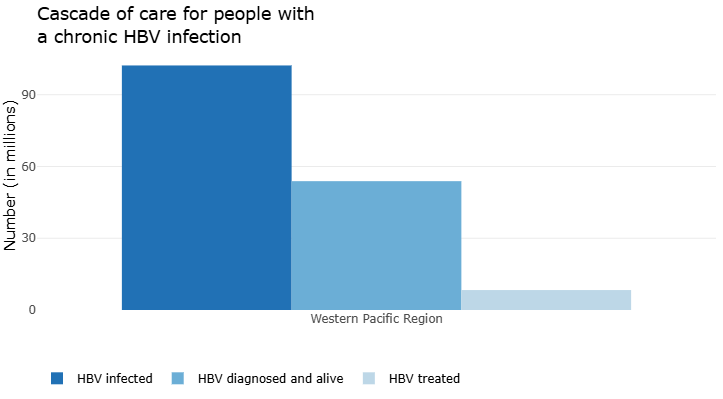
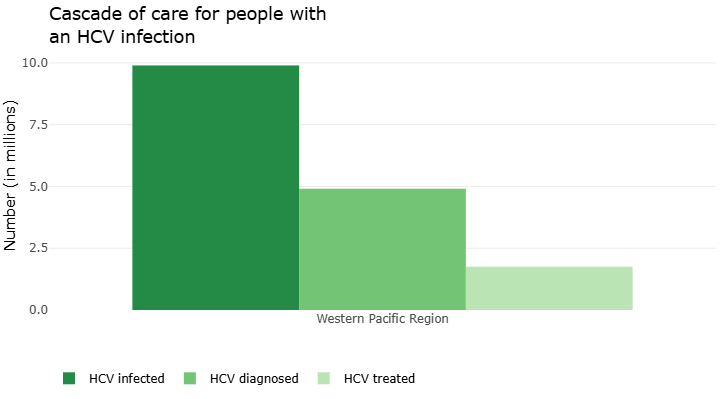
At the same time, the Region has made substantial progress in preventing hepatitis B among infants, with timely birth-dose vaccination coverage reaching 78% and third-dose coverage reaching 88% in 2024. However, major gaps remain in diagnosis and treatment coverage. Only 53% of people living with hepatitis B had been diagnosed and just 8.2% were receiving treatment; for hepatitis C, 50% had been diagnosed and 18% treated.
Closing these gaps will require expanding simple, decentralized test-and-treat services through primary care and integrating hepatitis services into routine health systems to ensure earlier diagnosis and timely access to treatment.
Cascade of care in the Western Pacific Region (2000–2024)
Wide gaps remain between the number of people infected, diagnosed and treated for both hepatitis B and hepatitis C.
Source: WHO hepatitis report profile.
References
For further regional and country-level data on HIV, hepatitis and STIs, visit the Regional HIV, Hepatitis and STI Dashboard.