Exclusive breastfeeding for the first six months of life
regional prevalence of exclusive breastfeeding for the first six months of life (latest estimates, 2018–2024).
Breastfeeding for a sustainable start in life: Strengthen what works
Protection, promotion and support of breastfeeding is a double-duty action to address all forms of malnutrition, safeguarding maternal and child health. Breastfed children have fewer childhood infections, better intelligence, and lower risk of chronic diseases in adulthood. Mothers who breastfeed reduce their risk of postpartum haemorrhage, breast and ovarian cancers, heart disease, and type 2 diabetes. Optimal breastfeeding protects against noncommunicable diseases, making it one of the "best-buy" interventions to reduce unhealthy diets. In addition, breastfeeding reduces economic burdens on society by saving families money on commercial substitutes and lowering healthcare costs.
Suboptimal exclusive breastfeeding is prevalent in the Western Pacific Region. As shown in Figure 1, the rate of infants who were exclusively breastfed for the first 6 months in the Region ranged from 35.1% to 76.2%, based on the latest available data in 2025. Data gaps persist across many countries for the exclusive breastfeeding indicator. Addressing this presents an opportunity to strengthen the nutrition information system and implement more effective and targeted interventions.
In conjunction with the World Breastfeeding Week 2026, let's strengthen what works to protect, promote, and support breastfeeding. A global analysis of infant and young child feeding outcomes reveals a clear association between strength of national legislation and breastfeeding practices. In the Western Pacific Region, based on available data, a higher proportion of countries with substantial or moderate Code alignment generally report exclusive breastfeeding rates above 50% compared to those with some Code provisions or no legal measures. Notably, 10 countries in the Region have yet to implement any legal measures to regulate inappropriate marketing of breast-milk substitutes (BMS). Since the BMS status report in 2024, a few countries in the Region have either improved their legal measures or identified older, existing legal instruments that somewhat align with the International Code of Marketing for Breastmilk Substitutes and subsequent relevant World Health Assembly resolutions. As of February 2026, eight countries in the Region have legal measures substantially aligned with the Code, while three countries show moderate alignment and seven have adopted some Code provisions.
Full implementation of the Code is critical to facilitate increased rates of exclusive breastfeeding and continued breastfeeding. This includes regulating the digital marketing of breast-milk substitutes to better protect, promote, and support breastfeeding.
Find out more about the World Breastfeeding Week 2026 here.
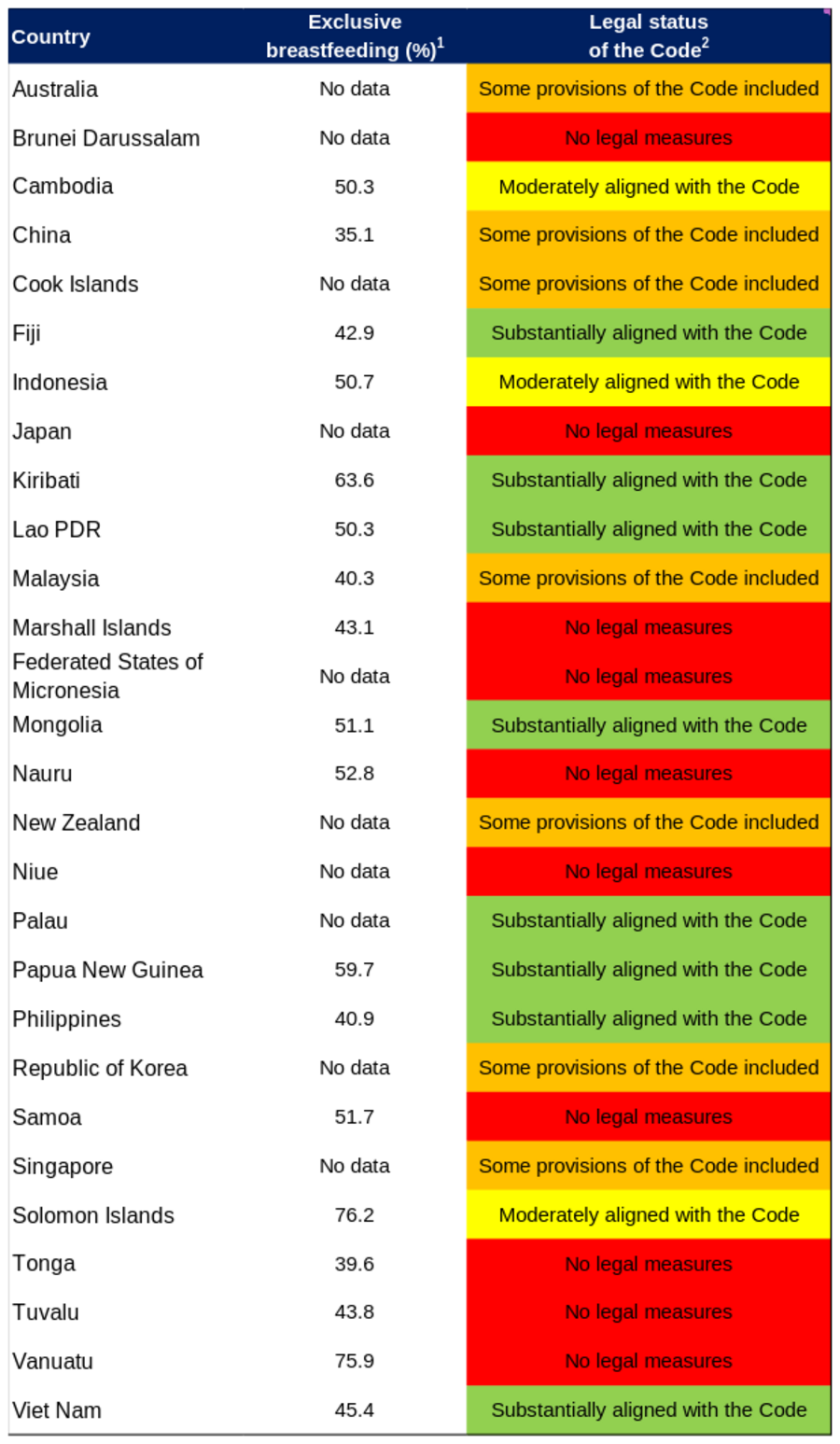
Note: The colour in the 'Legal status of the Code' column refers to:
- Green: Substantially aligned with the Code (encompassing a significant set of provisions of the Code, total score of 75–100)
- Yellow: Moderately aligned with the Code (encompassing a majority of the provisions of the Code, total score of 50 – <75)
- Orange: Some provisions of the Code (covering less than half of the provisions of the Code, total score of <50)
- Red: No legal measures (either no action, voluntary agreements or other non-legal measures)
References
- United Nations Children's Fund, Division of Data, Analysis, Planning and Monitoring (2025). UNICEF Global Databases: Infant and Young Child Feeding — Exclusive breastfeeding, New York, November 2025.
- Marketing of breast-milk substitutes: national implementation of the international code, status report 2026.
Related links