Treatment coverage for diabetes
aged 30 years and above in the Region who have diabetes receive treatment.


Diabetes is a long-term disease that is due to the poorly controlled level of sugar in the blood stream either because of the low production of the hormone insulin or problems in its use. Poor blood sugar control leads to damage in many parts of the body – and can result into blindness, kidney failure, heart attacks and leg amputations.
In the Western Pacific:
- more than 220 million adults aged 18 years and above were estimated to have the disease in 2022, a four-fold increase compared to 51 million in 1990 and more than a fourth of cases worldwide1
- only half of people with diabetes know that they have the disease2 and less than half receive treatment3
- US $246 billion was spent on diabetes care in 20242
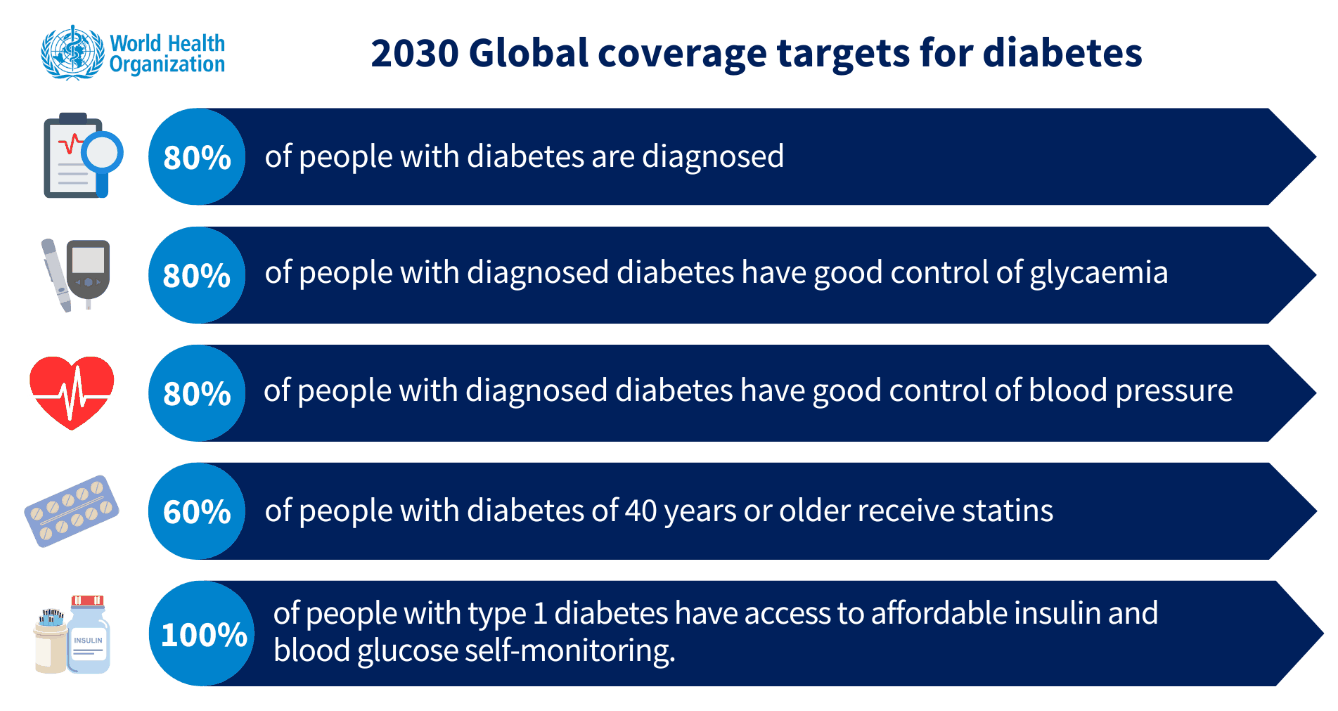
To address the huge and increasing diabetes burden, the Member States endorsed the Global Diabetes Compact in 2021, an initiative aimed at preventing and controlling the disease and attaining global coverage targets for diabetes by 2030.
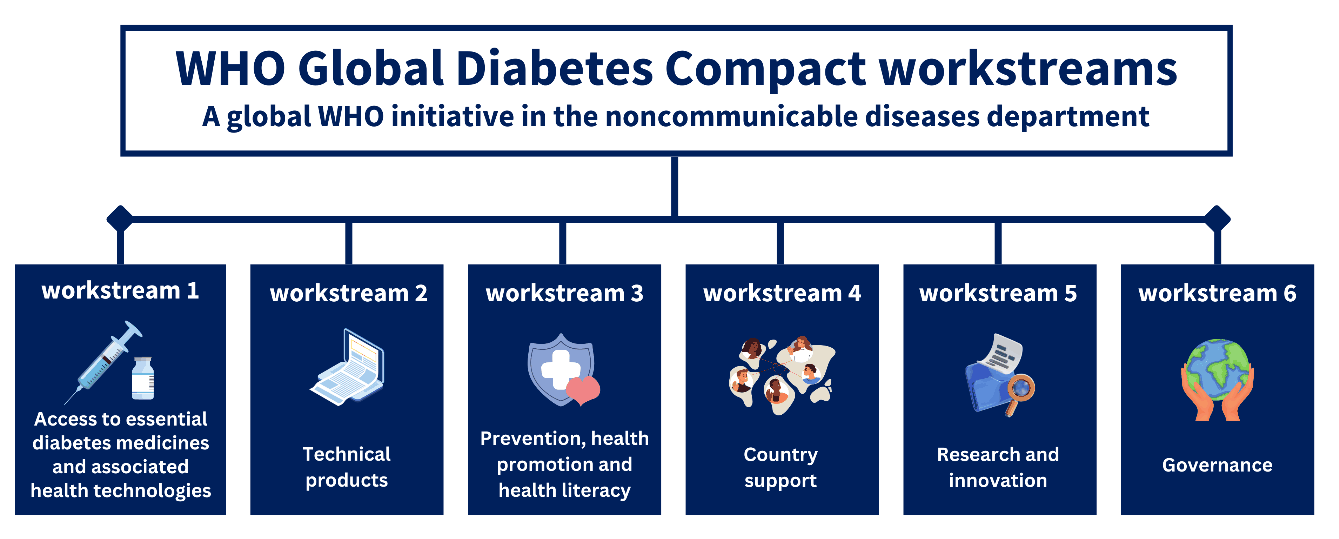
The Global Diabetes Compact focuses on six areas:
- Access to essential diabetes medicines and associated health technologies.
- Development of guidance and standards for diabetes management.
- Health promotion and health literacy.
- Adaptation of diabetes initiatives by the Member States
- Research in low- and middle-income countries.
- Governance and partnerships to unite stakeholders around a common vision for diabetes.
Learn more: Diabetes – WHO Western Pacific · World Diabetes Day 2026
- 2022 estimates for Diabetes, prevalence (%) from the WHO Global Health Observatory
- 2024 estimates from the IDF Diabetes Atlas 2025 | Global Diabetes Data & Insights
- 2022 estimates for Diabetes treatment coverage from the WHO Global Health Observatory